 Image 1 of 1
Did you know all E-Rate Service Providers must maintain records to demonstrate Lowest Corresponding Price adherence if audited?
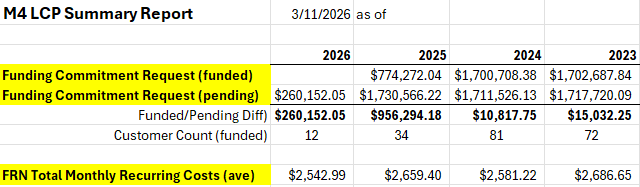
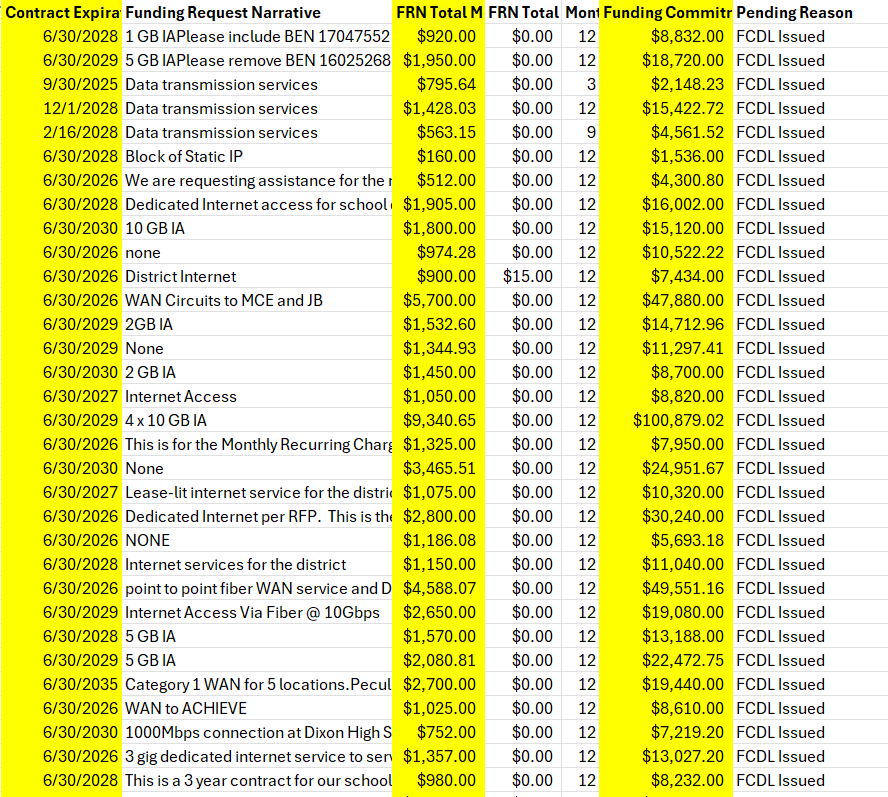
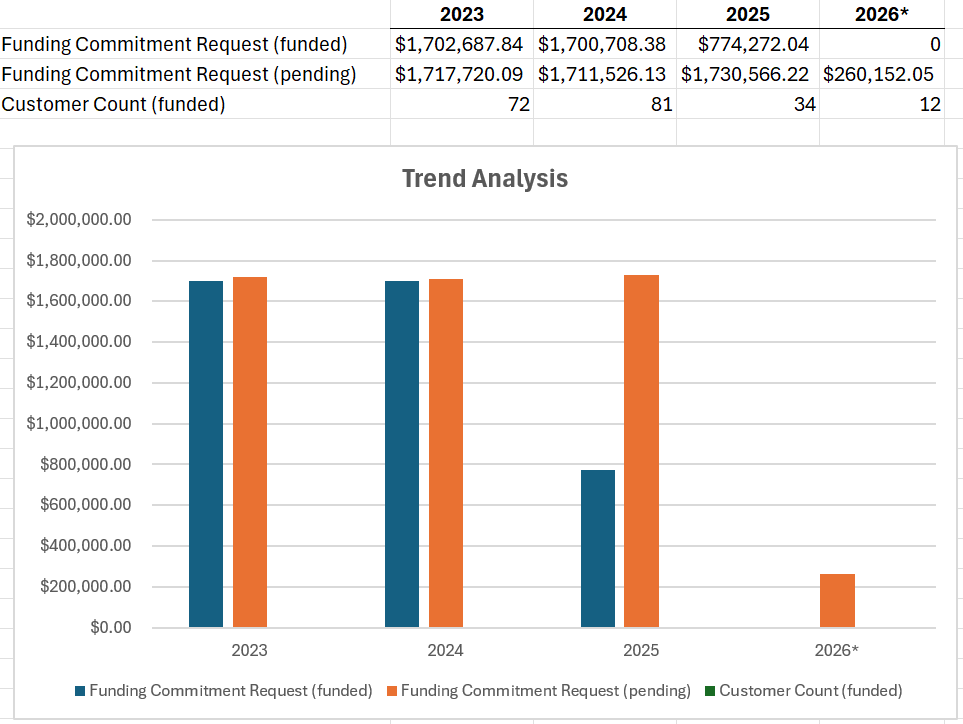
Introducing Map4 E-Rate LCP Compliance Reports.
✔️ Sourced from USAC FRN Open Data
✔️ 4 Year Summary of all FRN Activity
✔️ Fast Turn Time and Delivery
✔️ Independent Third Party
This rule has been in place since the E-Rate program’s early days but has seen varying levels of enforcement emphasis over time. If you’re an applicant or provider dealing with a specific situation, checking current FCC rules or consulting USAC resources is recommended.
What is LCP?
LCP is defined as the lowest price that a service provider charges to non-residential customers who are similarly situated to a particular E-Rate applicant (a school, library, or consortium) for similar services. (See 47 C.F.R. § 54.500.)
• “Similarly situated” generally means customers in the same geographic service area where the provider offers E-Rate services.
• This includes comparable non-residential customers (e.g., businesses or other entities) receiving equivalent services in terms of type, volume, contract terms, etc.
Who is Responsible?
• Primary responsibility lies with the service provider — they must offer and charge the LCP.
• Applicants (schools/libraries) are not required to specifically request or verify the LCP themselves, but they must receive it.
• In practice, applicants often include LCP compliance language in their FCC Form 470 bid requests or contracts to protect themselves.
Key Requirements
Under 47 C.F.R. § 54.511(b), service providers must not:
• Submit bids, or
• Charge E-Rate applicants (schools, libraries, etc.)
a price above their LCP for supported (eligible) services.
Exceptions are rare and require specific FCC (for interstate services) or state commission (for intrastate services) findings that the LCP is not compensatory (i.e., unprofitable).
Promotional rates lasting more than 90 days must be factored into determining the LCP.
Purpose of the Rule
The LCP requirement ensures:
• Service providers do not overcharge E-Rate participants just because they receive federal discounts (which cover 20–90% of costs, depending on poverty level and rural/urban status).
• Schools and libraries get fair, competitive pricing comparable to what other similar customers pay in the provider’s service area.
• The Universal Service Fund (funded by contributions from telecom carriers) is protected from waste, fraud, or abuse through inflated pricing.
Enforcement and Compliance
• USAC audits and Program Integrity Assurance (PIA) reviews may require service providers to certify LCP compliance.
• Violations can lead to recovery of overcharged funds, commitment adjustments, or other penalties.
• Service providers must maintain records to demonstrate LCP adherence if audited.For the most authoritative and up-to-date details, refer directly to USAC’s official page on this topic:
https://www.usac.org/e-rate/service-providers/step-2-responding-to-bids/lowest-corresponding-price/
Did you know all E-Rate Service Providers must maintain records to demonstrate Lowest Corresponding Price adherence if audited?
Introducing Map4 E-Rate LCP Compliance Reports.
✔️ Sourced from USAC FRN Open Data
✔️ 4 Year Summary of all FRN Activity
✔️ Fast Turn Time and Delivery
✔️ Independent Third Party
This rule has been in place since the E-Rate program’s early days but has seen varying levels of enforcement emphasis over time. If you’re an applicant or provider dealing with a specific situation, checking current FCC rules or consulting USAC resources is recommended.
What is LCP?
LCP is defined as the lowest price that a service provider charges to non-residential customers who are similarly situated to a particular E-Rate applicant (a school, library, or consortium) for similar services. (See 47 C.F.R. § 54.500.)
• “Similarly situated” generally means customers in the same geographic service area where the provider offers E-Rate services.
• This includes comparable non-residential customers (e.g., businesses or other entities) receiving equivalent services in terms of type, volume, contract terms, etc.
Who is Responsible?
• Primary responsibility lies with the service provider — they must offer and charge the LCP.
• Applicants (schools/libraries) are not required to specifically request or verify the LCP themselves, but they must receive it.
• In practice, applicants often include LCP compliance language in their FCC Form 470 bid requests or contracts to protect themselves.
Key Requirements
Under 47 C.F.R. § 54.511(b), service providers must not:
• Submit bids, or
• Charge E-Rate applicants (schools, libraries, etc.)
a price above their LCP for supported (eligible) services.
Exceptions are rare and require specific FCC (for interstate services) or state commission (for intrastate services) findings that the LCP is not compensatory (i.e., unprofitable).
Promotional rates lasting more than 90 days must be factored into determining the LCP.
Purpose of the Rule
The LCP requirement ensures:
• Service providers do not overcharge E-Rate participants just because they receive federal discounts (which cover 20–90% of costs, depending on poverty level and rural/urban status).
• Schools and libraries get fair, competitive pricing comparable to what other similar customers pay in the provider’s service area.
• The Universal Service Fund (funded by contributions from telecom carriers) is protected from waste, fraud, or abuse through inflated pricing.
Enforcement and Compliance
• USAC audits and Program Integrity Assurance (PIA) reviews may require service providers to certify LCP compliance.
• Violations can lead to recovery of overcharged funds, commitment adjustments, or other penalties.
• Service providers must maintain records to demonstrate LCP adherence if audited.For the most authoritative and up-to-date details, refer directly to USAC’s official page on this topic:
https://www.usac.org/e-rate/service-providers/step-2-responding-to-bids/lowest-corresponding-price/